Which Brush Should You Use for Glazing Pottery?
· Updated · 3 min read
Brushing is the easiest way to glaze at home. No buckets of glaze, no dipping tongs, and small jars of commercial glaze work fine. The catch is that a stiff or skimpy brush leaves streaks and bare spots that only show up after firing. The right brush fixes most of that.
What makes a good glaze brush?
It holds a lot of glaze and lays it down without dragging. Soft, dense natural hair (goat, sheep) carries more than stiff synthetic craft brushes, so you can flow glaze on in one smooth stroke instead of scrubbing. Bigger is usually better. Fewer strokes means a more even coat.
Brush by job
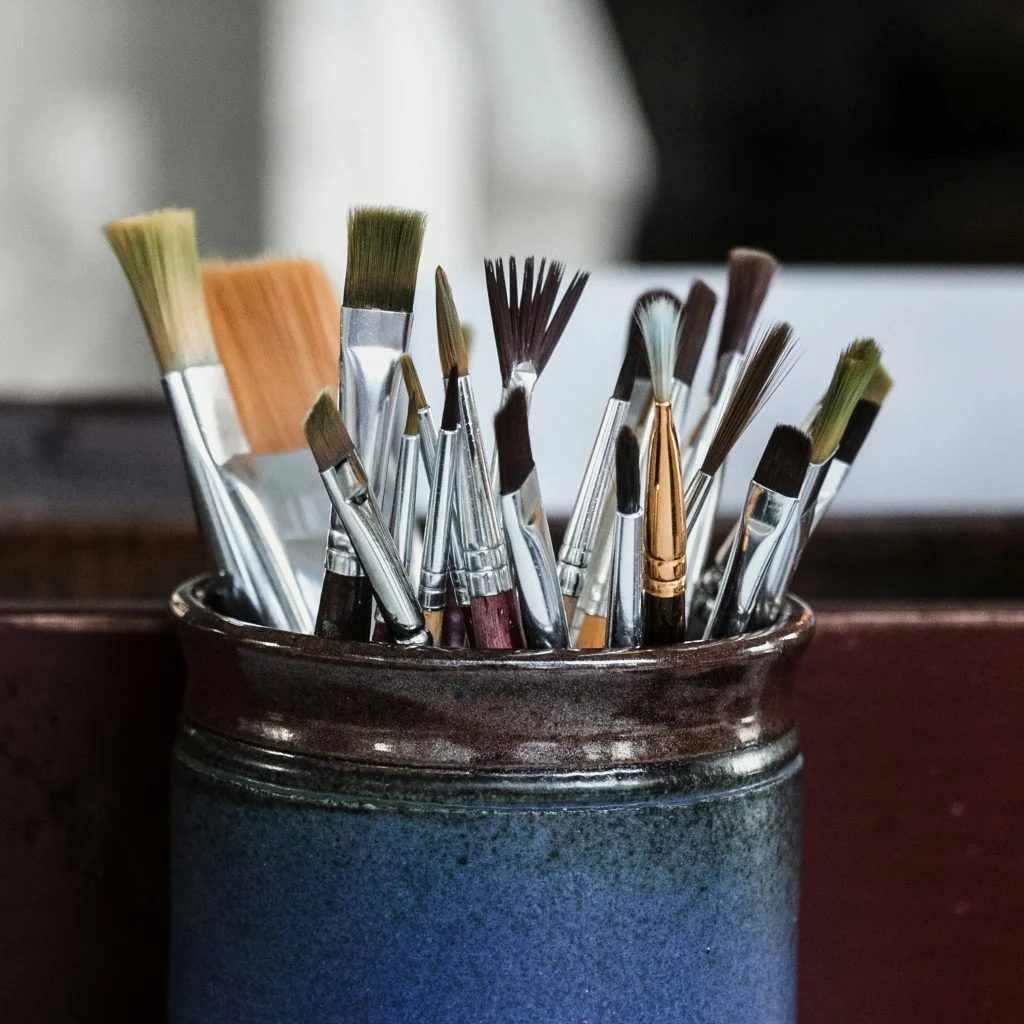
- Mop brushes (round, full heads): smooth all-over coats on mugs and bowls, color washes, blending underglaze.
- Fan brushes (wide, flat heads): large areas fast, plates and platters, soft feathered textures.
- Liner brushes (long, fine tips): outlines, lettering, bands and detailed underglaze painting.
- Soft wool brushes: dusting bisque before glazing, dampening clay, laying glaze over wide areas.
Glaze brushes
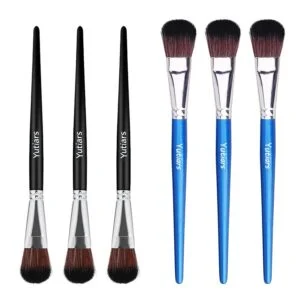
Use it for: Smooth all-over glaze coats on mugs and bowls
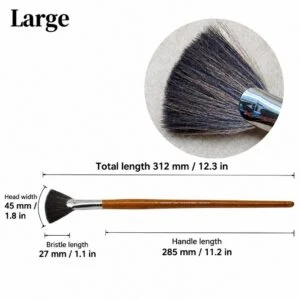
Use it for: Covering plates and large areas in a few wide strokes
Brushing glaze evenly
- Clean the bisque. Dust it with a soft brush or wipe it with a barely damp sponge. Dust and the oils from your hands stop glaze sticking.
- Stir the glaze well. It settles, and the bottom of the jar is a different color and thickness from the top.
- Load the brush fully and lay glaze on in long strokes in one direction. Don’t go back over wet glaze. That lifts it and leaves thin streaks.
- Wait until the shine disappears before the next coat, usually a few minutes.
- Brush each coat in a different direction (vertical, horizontal, then diagonal, say) to fill the gaps between strokes. The label decides how many. AMACO’s P-10 Opal Mist label, for example, says three brush coats, or two if you put it on heavily, and other glazes ask for different numbers.
- Wipe glaze off the bottom and the lowest 1/4 in of the pot with a damp sponge so it doesn’t fuse to the kiln shelf.
Dipping instead
If you mix glaze in buckets, dipping gives a fast, even coat. Hold the pot with glaze dipping tongs, dip for about two or three seconds to start, lift and let it drip. Dipping time depends on the glaze and how thick it’s mixed, so follow the recipe or label and test on a tile first. Small cups and bowls are easier with curved-tip glazing tweezers that hook the rim. Sieve mixed glaze through a glaze sieve first so lumps don’t end up on the pot.
Underglaze painting and drawing
For watercolor-style painting, water brush pens keep a steady flow without dipping. For crisp line drawings and signatures on bisque, underglaze pencils draw like a regular pencil. For raised dots and lines of slip or glaze, there’s the slip trailing bottle with needle tips.
Looking after brushes
Rinse them as soon as you finish, because glaze that dries in the heel splays the hairs. Reshape the tip with your fingers and dry brushes flat or bristles down. Keep glaze brushes for glaze only, and store them upright in a brush rack so the heads keep their shape.
Sources and further reading: AMACO P-10 Opal Mist application tips.
Questions potters ask
How many coats of glaze should I brush on?
As many as your glaze label says. Three is the most common for commercial brushing glazes, but some ask for two and some four. Brush each coat in a different direction after the last one loses its shine. Too few coats can fire patchy or thin.
Why do my brushed glazes look streaky after firing?
Usually too few coats, a brush that doesn't hold enough glaze, or brushing back over wet glaze. Use a full, soft mop or fan brush, lay the glaze on without scrubbing, and add another coat in a different direction.
Can I use regular paint brushes for glaze?
You can, but stiff synthetic craft brushes hold little glaze and leave streaks. Soft natural-hair mop and fan brushes give much smoother coats. Don't use a glaze brush for anything food related afterward.
Should glaze be thick or thin for brushing?
Commercial brushing glazes come at the right thickness, so just stir them well. If one has thickened in the jar, add a little water a few drops at a time until it brushes smoothly, like heavy cream.
How do I keep glaze off the bottom of my pot?
Wipe the foot and the lowest 1/4 in of the pot with a damp sponge before firing, or brush wax resist on the foot first so glaze beads off. Glaze left on the foot fuses the pot to the kiln shelf.