How Do You Use Silk Screen Stencils on Pottery?
· Updated · 2 min read
A silk screen stencil is a thin sheet of fine mesh with a design blocked out. Underglaze passes through the open mesh and leaves a sharp printed pattern on your pot: checks, florals, lettering, animals, abstract shapes, with far more detail than you could paint by hand.
Leather hard or bisque?
Leather hard is the usual choice. The clay is firm enough that the stencil won’t dent it and the underglaze bonds well. Stencil after trimming and before the piece dries. Bisque works too and is easy to handle, especially for flat tiles and plates. Wipe it with a damp sponge first so it’s clean and slightly damp. Stay away from soft clay, where the stencil sticks and presses dents in.
Step by step
- Lay the stencil flat with the design where you want it. On curved pieces, work a small area at a time so the mesh can touch the surface.
- Rub gently over it with your fingers so the mesh is in contact everywhere. Gaps let underglaze creep under and blur the edges.
- Apply the underglaze. It should be thick, about like yogurt. Spread it across the design with a plastic card or squeegee, or dab it on with a foam dauber. Two thin passes beat one heavy smear.
- Peel the stencil off in one smooth motion. Sliding it smudges the print.
- Rinse the stencil under running water straight away and lay it flat to dry. Underglaze that dries in the mesh blocks it for good.
- After the bisque firing, cover the design with a clear or translucent glaze.
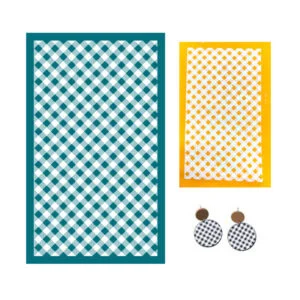
Stencils to start with Use it for: 38 small repeat designs, from checks to tulips and cats Use it for: Clean stripes, grids and honeycomb on mugs and tiles

Applying the underglaze
A foam dauber gives you the most control on curves. Dab straight down instead of wiping, and reload often. A soft mop brush works if you stipple rather than stroke. For flat tiles, a card or squeegee is fastest.
Tools for applying underglaze
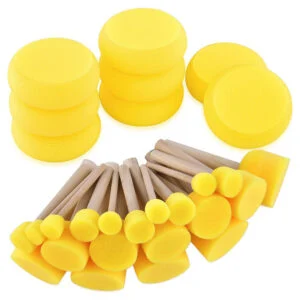
Use it for: Dabbing underglaze through stencils without lifting the mesh
Lettering and names
For names, dates and short words, plastic alphabet stencils work a bit differently. Trace the letters onto leather-hard clay to carve them, or dab underglaze through the cut-outs for painted lettering.
When it goes wrong
- Blurry edges: the underglaze was too thin or the stencil wasn’t pressed flat. Thicken it and press the mesh down firmly.
- Patchy print: not enough underglaze, or it dried before you finished. Work faster and add a second pass while the first is still damp.
- Stencil sticks to the clay: the clay is too soft. Let it firm up.
- Blocked mesh: underglaze dried in it. Soak in warm water and rinse gently, and next time rinse right away.
Adding texture as well? See how to add texture to clay.
Questions potters ask
Do silk screen stencils work with glaze or only underglaze?
They're made for underglaze, which stays where you put it. Most glazes flow and blur in the firing, so a stenciled glaze design usually loses its crisp edges.
How thick should underglaze be for a silk screen?
About like yogurt. Thin, watery underglaze runs under the mesh and blurs. If yours is thin, leave the lid off for a while, or let it settle and pour off some of the water on top.
Can I use a silk screen stencil on a curved mug?
Yes. Work in sections, pressing each part of the stencil flat against the curve as you go, and use a foam dauber rather than a squeegee. Smaller stencils are easier on tight curves.
How many times can I reuse a silk screen stencil?
Many, if you rinse it right after every use and store it flat. Most are ruined by dried underglaze in the mesh or by creasing.
Should I stencil on greenware or bisque?
Either. Leather-hard greenware is the usual choice because the underglaze bonds well before the bisque firing. Bisque is easier to handle and lets you wipe off a mistake with a damp sponge.