How Do You Add Texture to Clay? Rollers, Stamps, Mats and More
· Updated · 3 min read
A plain slab mug turns into a gift once it carries a pattern. Glaze also behaves differently over texture: it pools dark in the low spots and breaks thin over the high ones, which a smooth wall never does. You don’t need special skills, only the right tool and clay at the right firmness.
When is clay ready?
Soft to soft leather hard. It takes a clear impression without sticking to the tool or tearing. Too wet and the pattern smears and the tool sticks. Too firm and you have to press so hard the slab stretches or the piece distorts.
Texture a slab before you cut it into parts. The pattern then runs evenly to every edge and you can pick the best section. On a thrown pot, do it right after throwing while the walls are still soft, with your other hand supporting the inside.
Texture rollers
A roller presses one continuous pattern as you roll it, so it’s the quickest way to cover a slab for mugs, trays or tiles. Roll once with even pressure, because going back over a pattern rarely lines up. Carved wood rollers press deep, crisp patterns that stand up well to glaze. Seamless 3D-printed ones repeat with no visible join, good for wrapping all the way around a mug. Stamp roller wheels on a handle print a narrow band, perfect for borders around rims and feet.
Texture rollers worth a look
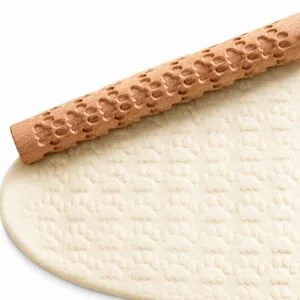
Use it for: Deep, crisp patterns across a whole slab, in ten carved designs
Skip it if: you mostly decorate small pieces; a stamp costs less and does it
Stamps
A stamp presses one design at a time, so you choose where each mark goes. Scatter motifs across a planter, center one on a tile, or put a small mark on the base of every pot that says you made it. Press straight down and lift straight up so the edges stay sharp.
Stamps for motifs and maker's marks
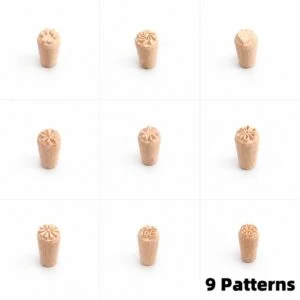
Use it for: A maker's mark or a row of small round motifs along a border
Texture mats
Flexible mats carry more detail than most rollers. Lay the mat on your slab and roll over it with a rolling pin, or lay the slab on the mat and roll the back. They suit tiles, ring dishes, coasters and slab plates.
Texture mats
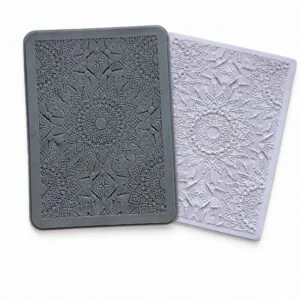
Use it for: Vintage flower and leaf relief on dishes and earrings
Lace, fabric and found textures
Lace leaves the finest texture of all. Lay a strip on the slab, roll over it once and peel it off. Embroidered lace ribbon comes on a roll, so you can cut a fresh piece for each project. Leaves, burlap and the linen you roll slabs on work too.
Scratched textures
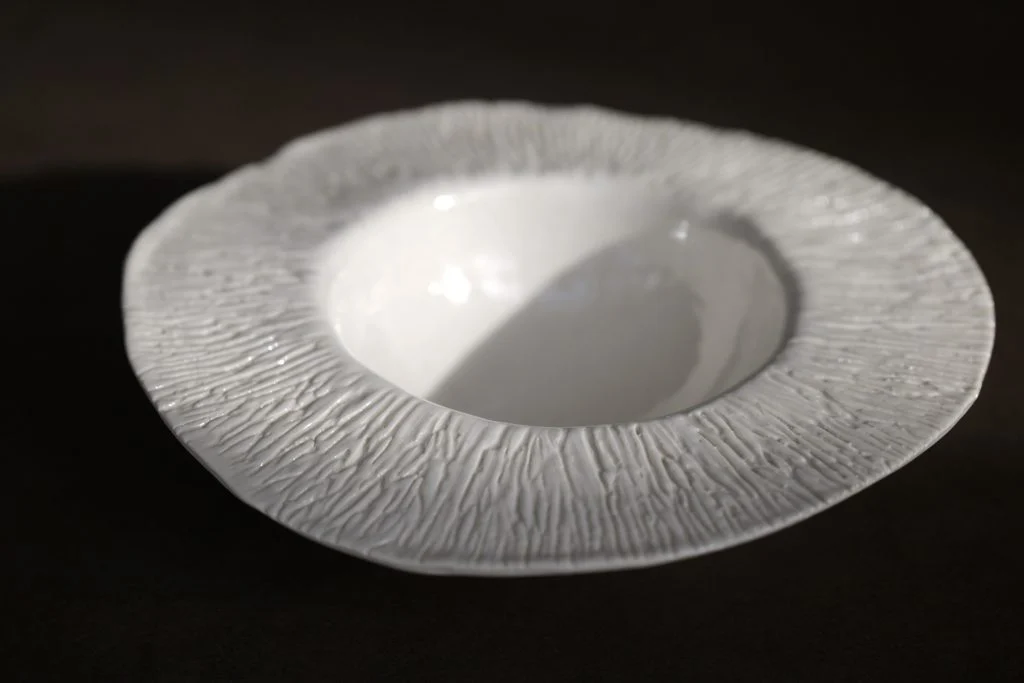
Not everything is pressed. A 7-pin feather texture tool scratches fur, feathers and wood grain in one stroke. A wire texture brush drags fine parallel lines or rough bark, and doubles as a scoring tool before joins.
Getting a crisp impression
- Dust tools with cornstarch (or brush a little oil on plastic ones) so they let go without pulling clay.
- Press evenly. Rock a stamp slightly rather than leaning on one edge.
- Brush clay out of the pattern with a soft brush before it dries in the grooves.
- Glaze to show it off. A translucent glaze that pools in the recesses, or a dark underglaze wiped back off the high points, makes texture pop.
Building with textured slabs? See how thick to roll slabs first.
Questions potters ask
Should I add texture before or after cutting a slab?
Before, in most cases. Texturing the whole slab first keeps the pattern even right to the edges, and you can cut your pieces from the best part. Cut first and the edges stretch, which distorts the pattern near them.
How do I stop clay sticking to texture rollers and stamps?
Dust the tool lightly with cornstarch, or brush a thin layer of oil on plastic tools, and let the clay firm up a little before pressing. If it still sticks, it's too wet.
Can I add texture to a thrown pot?
Yes. Roll a stamp wheel or press stamps into the wall right after throwing, while it's soft, with your other hand supporting the inside. For an all-over pattern, many potters texture a slab and build the pot from that.
What glaze shows off texture best?
Glazes that break over edges and pool in recesses, often called breaking glazes. A dark underglaze brushed on and wiped off the high points also makes patterns stand out under a clear glaze.
Do texture tools work with polymer clay?
Yes. Rollers, stamps, mats and lace all work on polymer clay too, which is why many are sold for earrings. Keep tools you use with polymer clay separate from your pottery tools and anything that touches food.