How Do You Center Clay on the Wheel? Why Yours Keeps Wobbling
· Updated · 3 min read
Centering is where a lot of people decide they’re bad at pottery. They’re not. It’s mostly posture, and it takes longer than anyone tells you. Half of it is set up before you touch the clay.
Set up
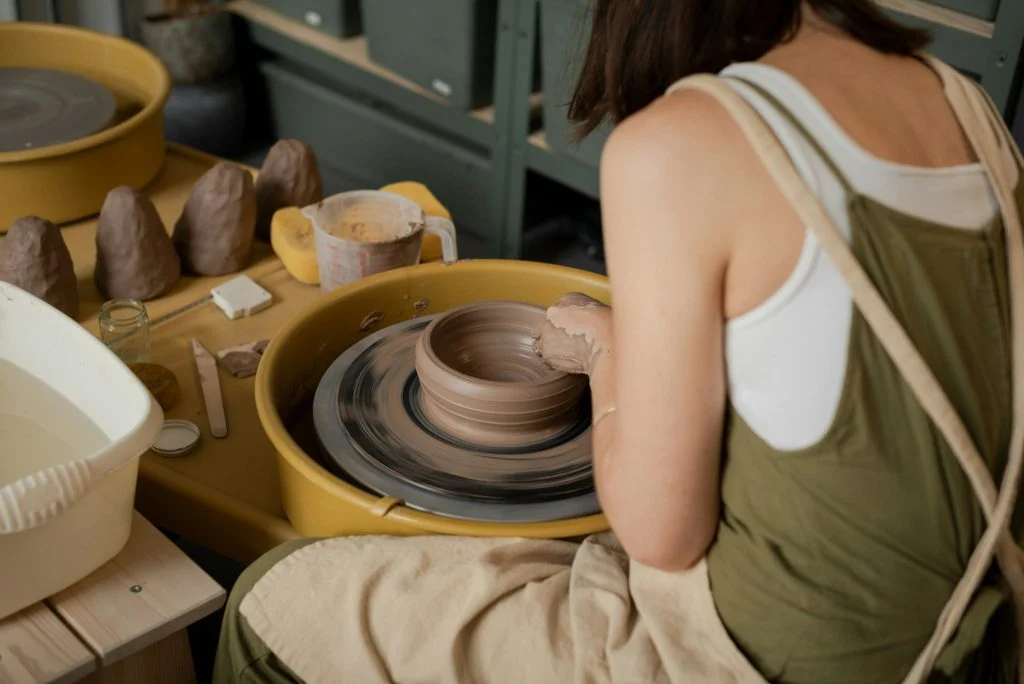
- Use 2 to 3 pounds of clay. Small balls feel twitchy.
- Wedge it. Lumps and air pockets make it move unpredictably.
- Use a damp bat, damp but not puddled, so the clay has something to grip. If you throw on the wheel head, make sure it’s clean.
- Sit so your shoulders are over the clay and your forearms can rest on your thighs. Your body is the clamp, not your arms.
- Water will fly. A clip-on splash shield and an apron help.
The method
- Slap the ball into the center of the bat, harder than feels necessary. Push the base out with your thumbs so it seals all the way around.
- Start the wheel fast. Wet your hands with a sponge, not a bucket. You want a thin slurry, not puddles. Too much water is the biggest reason clay slips.
- Lock your left elbow against your hip or thigh and bring your right hand in with the heel against the clay.
- Squeeze the clay between both hands and lift it into a tall cone. Even pressure, or it tears.
- Move your hands to the top and push the cone back down into a dome, toward the center of the wheel, not just down. Go up and down two or three times. It works the clay too.
- Check with a fingertip. If the clay moves your finger, it isn’t there yet.
- Let go slowly. Slide your hands off over a couple of seconds while keeping contact.
When it goes wrong
The ball flies off. Too much water, or the base never sealed. Wipe the bat down to damp, slap the clay on, and press its bottom edge into the bat before it starts moving.
It mushrooms at the top. You’re coning up too fast, or your hands are creeping up. Squeeze slower, keep your hands level with the clay, and try a faster wheel.
It wobbles the moment you let go. Often you let go too fast, pressed harder with one hand than the other, or didn’t brace your elbows. It can also be the clay (a hard lump or air pocket left by uneven wedging), a ball that was stuck down off center, or a bat that sits loose on its pins. If a slow, clean release still wobbles, try another bat or wedge a fresh ball.
It turns gritty. You’ve been at it too long with too much water, and the fine clay has washed into the slurry. If it’s taking more than a few minutes, stop, wedge a new ball and start over.
Your wrists hurt. You’re using arm strength. Drop your seat, lock your elbows, lean your body into it, and keep your wrists straight.
It’s fine until you open it. A hand lifted off, or the pressure was uneven. Keep a hand on the clay the whole time and move your thumb into the center slowly.
Do tools help?
Technique matters more than anything you can buy. Still, a centering aid gives you something to brace against while your muscles learn it, and a pack of round throwing sponges keeps the water under control. If you throw wide pieces, a bat system lets you lift them off without touching. The rest of the kit is in our beginner tools guide.
Wheel essentials
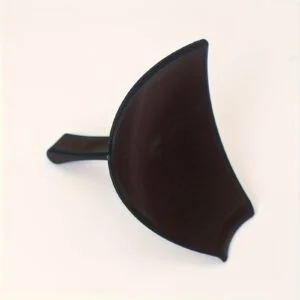
Use it for: Bracing and guiding while you build muscle memory
Skip it if: you have a teacher at your elbow. It's a training aid, not a must
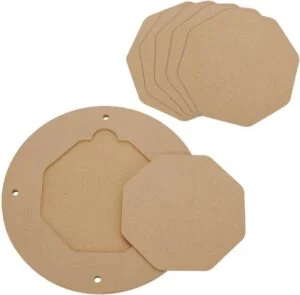
Use it for: Lifting wide pieces off the wheel without touching them
How long until it clicks
Weeks, usually. Some days it works and the next day it doesn’t, which is normal. Throw the same amount of clay every session and pay attention to what you did on the good days.
Questions potters ask
How do I know when it's centered?
Rest a fingertip lightly against the spinning clay. If it feels still, with no bump pushing back, it's centered. Your hands also stop getting shoved around.
Should the wheel go fast or slow?
Faster than feels comfortable. On a slow wheel every bump hits your hands harder, so it feels wobblier. Brace first, then speed up.
How much clay should a beginner start with?
Two to three pounds. A small ball is twitchy, and there's not enough of it to brace against. Go smaller once centering is reliable.
Why does my clay keep flying off the wheel?
Usually too much water on the wheel head or bat, or the base wasn't pressed on. Slap it down on a damp (not wet) surface and press the bottom edge into the bat before you start.
Which way does the wheel spin?
Most spin counterclockwise, which suits right-handed throwers. Many have a reverse switch for lefties.
Do I have to wedge first?
Yes. Air pockets and lumps of different softness make the clay fight you. Wedge it, then shape the ball roughly round.