How Do You Keep Pottery From Cracking While It Dries?
· Updated · 3 min read
Clay shrinks as it dries. If the whole piece shrinks evenly, it stays whole. If one part dries faster, like a thin rim, a handle or the side facing a window, that part shrinks first and pulls against the rest. That tension is what cracks pots.
Which crack, which cause
- S-cracks in the floor of a thrown pot: the floor wasn’t compressed, or water pooled in the bottom while it dried.
- Cracks at handles and joins: the pieces were at different dryness when joined, or the join wasn’t scored, slipped and compressed.
- Rim cracks: the rim dried much faster than the body.
- Warped or cracked slabs and plates: uneven thickness, or one side dried faster.
- Base cracks on thick pieces: the base stayed wet long after the walls dried.
1. Even walls
Thick and thin areas dry at different speeds, so aim for the same thickness everywhere, base included. For slabs, slab rolling guides make every one the same. On the wheel, check the floor with a needle tool and trim heavy bases at leather hard.
2. Compress the floor and every join
Compressing lines up the clay particles and makes them stronger. After opening a pot on the wheel, press the floor with a soft rubber rib from the center outward, several times. In handbuilding, compress slabs on both sides and smooth every seam with a rib.
For compressing and smoothing
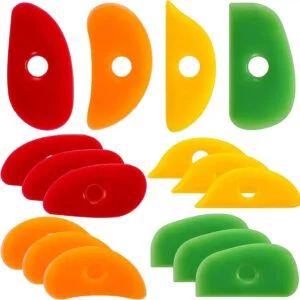
Use it for: Compressing floors and smoothing joins to prevent S-cracks
3. No water in the bottom
Water pooled in the floor keeps that spot soft while the walls dry, a classic cause of S-cracks. Sponge it out before you cut the pot off the wheel. A sponge on a stick reaches into tall, narrow pots, and a soft PVA sponge soaks water out of wide bowls.
4. Dry slowly and evenly
- Cover pots loosely with plastic for the first day or two, then open it up gradually.
- Keep them out of drafts, sun and heaters. One warm side means uneven shrinkage.
- Wrap rims and handles. These thin parts dry first, and a strip of stretch film around a rim or over a handle lets the body catch up.
- Turn pots over once they’re firm enough, so the base, which dries slowest, gets air.
For slow, even drying
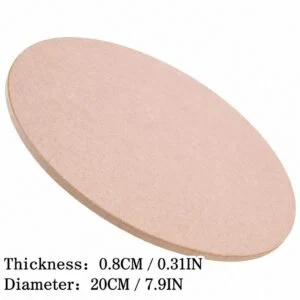
Use it for: Drying flat pieces and fresh pots on an absorbent board
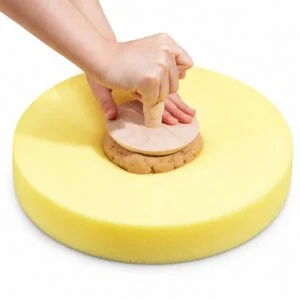
Use it for: Resting pots upside down without crushing the rim
5. Join at the same dryness
Attach handles, feet and slab walls when both pieces are at the same stage, usually soft leather hard. Score both surfaces, add slip, press firmly and compress the seam. A handle much wetter than the mug shrinks more and pulls away.
6. Dry flat pieces flat
Plates, tiles and slab pieces dry best on an absorbent surface, or sandwiched between boards or drywall so both sides dry at the same rate. Flip them occasionally. A bat system lets you lift thrown pieces off the wheel without bending them, which avoids hidden stresses that crack later.
Can a crack be repaired?
Sometimes. Small cracks in damp greenware can be closed by scoring, filling with slip or paper clay and compressing, but repairs often reopen in the kiln. Fix the cause on the next piece. New to all this? Start with the tools beginners actually need.
Sources and further reading: Digitalfire: Drying cracks.
Questions potters ask
Why do the bottoms of my pots crack?
Base cracks, often S-shaped, usually mean the floor wasn't compressed, water pooled in the bottom, or the base was much thicker than the walls. Compress the floor with a rubber rib, sponge out water and trim heavy bases.
Should I cover my pots with plastic while they dry?
Yes, loosely at first. Plastic slows drying so all the parts shrink together. Open it up gradually over a few days, and wrap rims and handles more snugly, since they dry fastest.
Why do handles crack where they join the mug?
Usually the handle and mug were at different dryness when joined, or the join wasn't scored, slipped and compressed. Attach handles at the same soft leather-hard stage and dry the mug slowly with the handle wrapped.
Can I speed up drying with a hairdryer or heater?
Gentle, even warmth can help a piece firm up for trimming. Drying fast from one side is a common cause of cracks and warping, though, so for drying all the way, slow and even is safer.
Can I fix a crack in greenware?
Small cracks in damp greenware can sometimes be repaired with slip or paper clay and compressed, but repairs often reopen in the kiln. Usually it's better to fix the cause on the next piece.