How Do You Cut Clay Cleanly? Wires, Cutters and Knives
· Updated · 2 min read
Most messy cuts have two causes: clay that’s too soft, and the wrong tool for the job. Fix those and walls join cleanly, edges need less cleanup, and a set of pieces actually matches.
Cutting wires
A wire is the first cutting tool every potter needs. It slices clay off a block, cuts through a lump to check for air bubbles while you wedge, and cuts finished pots off the wheel head or bat. Hold it taut with both hands and keep it flat against the wheel as you pull it toward you. With the wheel turning slowly the wire cuts the pot free in one pass, and a still wheel gives a straight, flat cut. A twisted wire leaves a shell-like pattern on the base when pulled through a turning pot, and a plain wire leaves it smooth.
Cutting wires
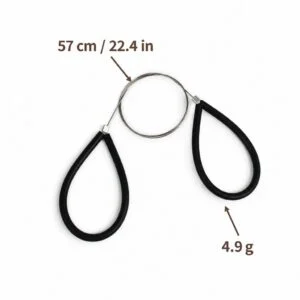
Use it for: Everyday cutting with comfortable rubber grips
Knives
A fettling knife is the handbuilder’s main cutting tool: thin, flexible, sharp. Run it along a ruler for straight slab edges, trim seams and lips, carve clay away. Hold the blade upright for a square edge or tilt it for a bevel. For repeated shapes, cut around a template like an oval slab template.
Cutters
Cutters press out the same shape every time: circles for mug bases and lids, squares for tiles and boxes, fun shapes for ornaments and appliques. Press straight down, wiggle gently, lift. Dip the cutter in water or cornstarch between cuts so the clay lets go.
Cutters for slabs
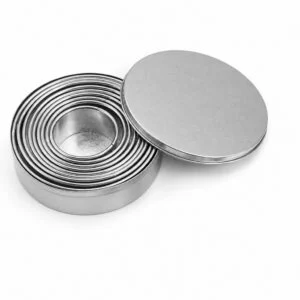
Use it for: Mug bases, lids and coasters from 1.2 to 4.7 in
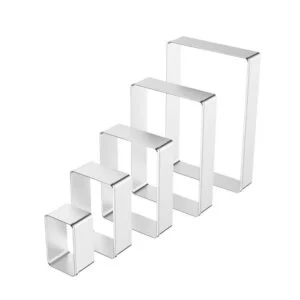
Use it for: Tiles, box sides and square or rectangle parts
Skip it if: you only need the odd square: a ruler and a needle tool cut one
Holes
Hole cutters punch clean round holes for hanging ornaments, berry bowls, strainers and pierced decoration. Cut at leather hard and twist the cutter as you push so it doesn’t tear the clay.
Bevels
Where two slab walls meet, a 45 degree bevel on each edge gives you more surface to join and a neat corner. A bevel cutter cuts 30, 45 or 60 degree edges consistently, which beats angling a knife by eye. More on slab joins and thickness.
Shapes for ornaments and gifts
Seasonal and themed cutters turn scraps into ornaments, gift tags and appliques. Stainless Christmas cutters and animal cutters are popular for holiday ornaments, and stamp cutter sets cut and print a design in one press.
Cleaner cuts
- Let slabs firm up slightly. Soft clay drags and distorts, and soft leather hard cuts crisply.
- Keep blades and cutters clean, and dip them in water between cuts.
- Clean up edges with a damp sponge or a soft rubber rib once pieces firm up.
Questions potters ask
How do I cut a pot off the wheel without warping it?
Pull a taut wire flat against the wheel head or bat in one smooth pass, then let the pot firm up before lifting it. Throwing on a bat lets you lift the whole bat instead of the pot, which avoids distortion.
Why does my clay tear or drag when I cut it?
The clay is too soft, or the blade is dull or dry. Let slabs firm to soft leather hard, use a sharp fettling knife or cutter, and dip the blade in water between cuts.
What is a fettling knife used for?
A thin, flexible knife for cutting slabs, trimming seams, cleaning edges and carving. It's the handbuilder's everyday cutting tool.
Can I use cookie cutters on clay?
Yes, plenty of potters do. Once a cutter has touched clay, keep it for clay and don't use it for food again. Cutters made for clay are often sharper and deeper, which cuts thicker slabs cleanly.
What is the difference between a twisted and a plain cutting wire?
A plain wire cuts a smooth, flat base. A twisted wire, pulled through a slowly turning pot, leaves a shell-like swirl on the bottom that many potters like as a signature.